Types of Syringes and Their Uses | Complete Medical Syringe Guide
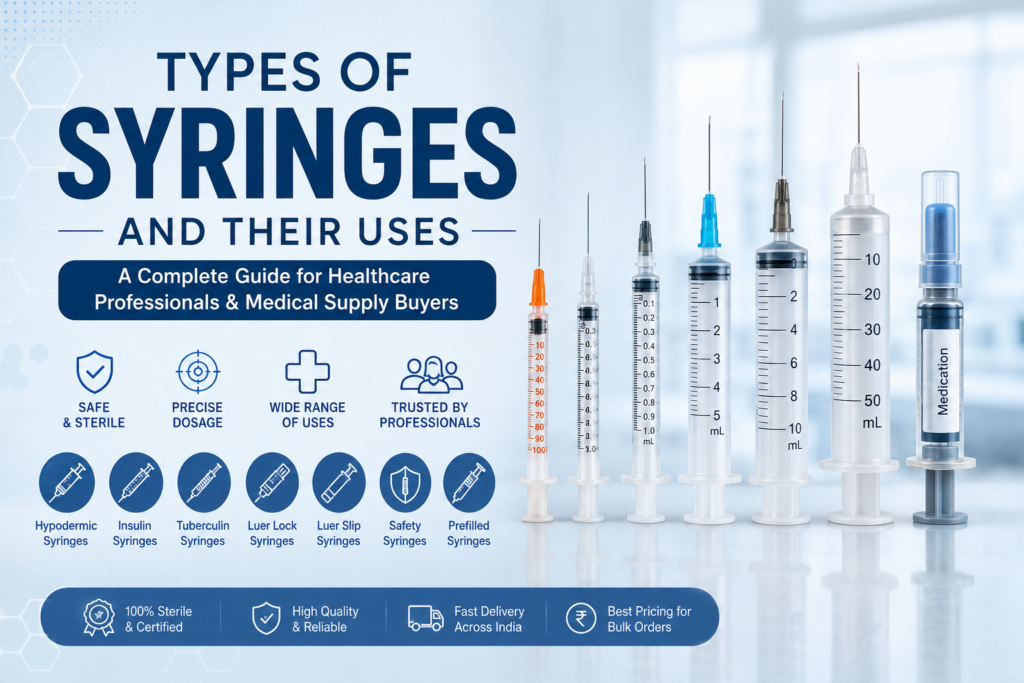
In modern healthcare, syringes are among the most essential medical disposables used in hospitals, clinics, laboratories, and home care settings. They are designed for injecting medications, withdrawing fluids, and delivering precise dosages safely and hygienically.
Choosing the right type of syringe is extremely important because each syringe is designed for a specific medical purpose, such as injections, insulin delivery, vaccinations, or blood collection.
This guide explains the major types of syringes, their uses, sizes, and importance in medical practice.
Types of Syringes
1. Hypodermic Syringes
Hypodermic syringes are the most commonly used syringes in hospitals and clinics.
Uses
- Intramuscular (IM) injections
- Intravenous (IV) injections
- Subcutaneous injections
- Drawing blood samples
Features
- Available in multiple sizes ranging from 1 ml to 50 ml or more
- Compatible with detachable needles
- Suitable for general medical procedures
These syringes form the backbone of everyday hospital injection practices.
2. Insulin Syringes
Insulin syringes are specially designed for diabetic patients who require daily insulin injections.
Uses
- Insulin administration for diabetes management
Features
- Small barrel sizes such as 0.3 ml, 0.5 ml, and 1 ml
- Fine and short needles for reduced pain
- Calibrated in insulin units instead of milliliters
These syringes help ensure accurate insulin dosage for safe diabetes care.
3. Tuberculin Syringes
Tuberculin syringes are designed for highly accurate small-volume measurements.
Uses
- Tuberculosis (TB) skin testing
- Allergy testing
- Pediatric injections
- Vaccine dosage measurement
Features
- Typically available in 1 ml capacity
- Highly precise markings with 0.01 ml accuracy
- Thin needles for minimal discomfort
4. Luer Lock Syringes
Luer lock syringes feature a locking mechanism that securely attaches the needle to the syringe.
Uses
- High-pressure injections
- IV medication delivery
- Procedures requiring leak prevention
Features
- Secure twist-lock system
- Strong needle attachment
- Reduced risk of accidental needle detachment
5. Luer Slip Syringes
Luer slip syringes use a simple push-fit connection for attaching needles.
Uses
- Routine injections
- General medication administration
Features
- Easy to use
- Quick needle attachment
- Cost-effective solution
6. Safety Syringes
Safety syringes are specifically designed to reduce needle-stick injuries and improve infection control.
Uses
- Hospitals
- Emergency care
- High-risk infection control environments
Features
- Needles automatically retract or become covered after use
- Enhanced safety for healthcare workers
- Reduced risk of contamination and infection
7. Prefilled Syringes
Prefilled syringes come preloaded with medication, making them ideal for fast and accurate administration.
Uses
- Vaccinations
- Emergency medications
- Hospital procedures requiring rapid response
Features
- No manual filling required
- Reduced contamination risk
- Faster and more convenient during emergencies
Syringe Sizes and Their Importance
Syringes are available in various sizes depending on the intended medical application.
| Syringe Size | Common Uses |
|---|---|
| 1 ml to 3 ml | Vaccines, insulin, pediatric injections |
| 5 ml to 10 ml | General medication administration |
| 20 ml to 50 ml | Fluid withdrawal and IV procedures |
| Above 50 ml | Irrigation and specialized procedures |
Smaller syringes provide greater dosage accuracy, while larger syringes are better suited for handling larger fluid volumes.
Uses of Syringes in Medical Practice
Syringes are used across nearly every healthcare environment.
Hospitals
- Drug administration
- Emergency injections
- Surgical support procedures
Clinics
- Vaccinations
- Routine treatments and therapies
Laboratories
- Sample collection
- Diagnostic testing and research
Home Care
- Diabetes management
- Doctor-prescribed self-injections
Importance of Choosing the Right Syringe
Selecting the correct syringe is essential for:
- Patient safety
- Accurate dosage delivery
- Reduced injection pain
- Infection prevention
- Effective medical outcomes
Using the wrong syringe can result in dosage errors, patient discomfort, or ineffective treatment.
Why Buy Syringes from Surgical Shoppe
At SurgicalShoppe.co.in, we focus on providing:
- 100% sterile and certified medical syringes
- A wide range of disposable syringes
- Competitive pricing for bulk orders
- Trusted quality for hospitals, clinics, and pharmacies
- Fast delivery across India
We ensure healthcare professionals receive safe, reliable, and high-quality medical disposables for every procedure.
Conclusion
Syringes may seem small, but they play a vital role in modern healthcare. From insulin management to emergency treatments, different types of syringes are designed for different medical purposes.
Understanding syringe types and applications helps healthcare professionals, clinics, and medical buyers make informed decisions for safer and more effective patient care.
For hospitals, clinics, and bulk medical supply requirements, choosing a trusted supplier like Surgical Shoppe ensures quality, safety, and reliability in every medical procedure.