
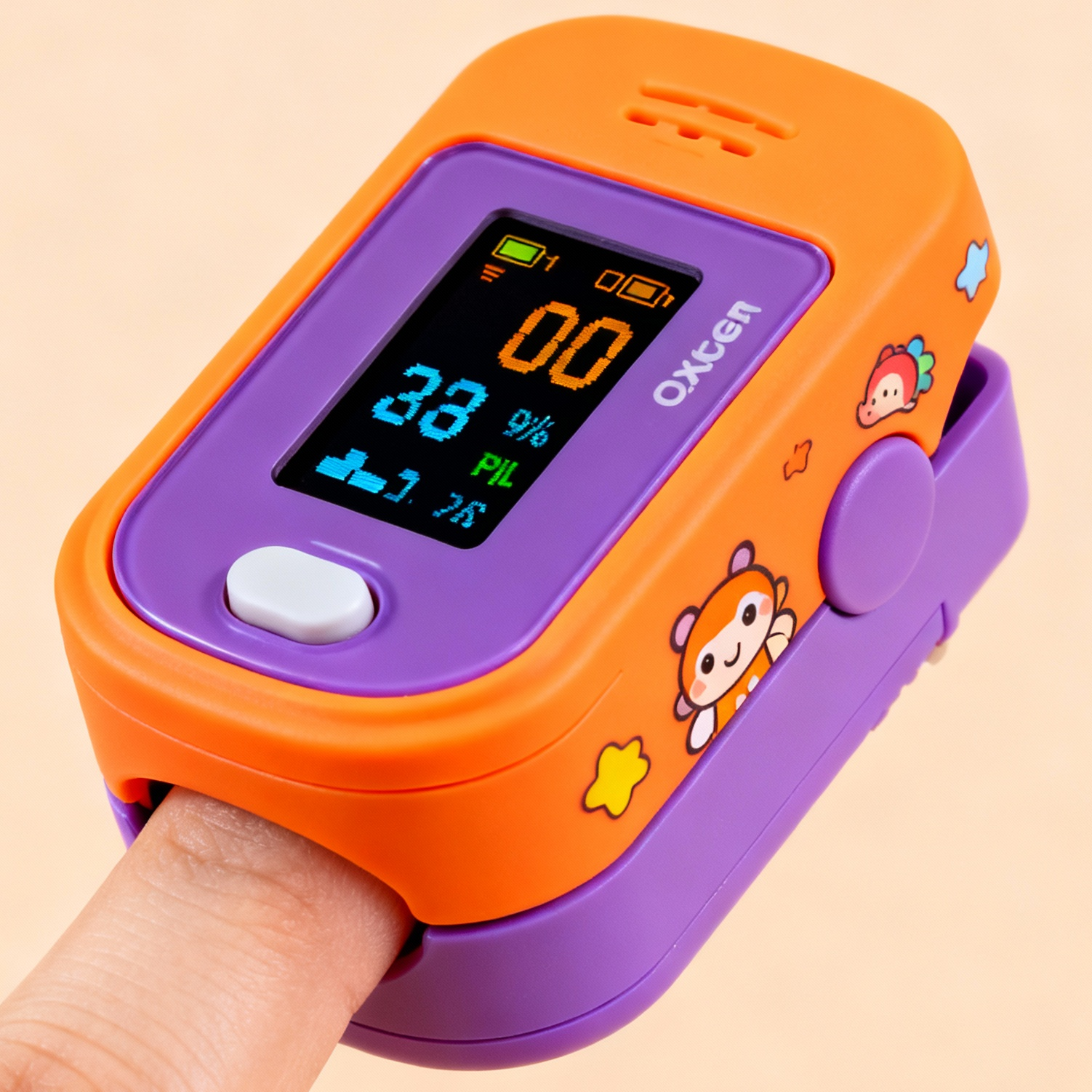
Child-Friendly Pulse Oximeter Accurate, Painless Oxygen and Pulse Monitoring for Kids
Original price was: ₹2,700.00.₹1,800.00Current price is: ₹1,800.00. excl. gst
A pulse oximeter for children is a small, non-invasive device that clips onto a child’s finger to quickly and accurately measure oxygen saturation levels (SpO2) and pulse rate. It helps monitor respiratory health easily and painlessly, providing essential data on how well a child’s lungs are functioning. Many models are designed specifically for children, with kid-friendly features like fun shapes or colorful displays, and offer readings within seconds while ensuring comfort and safety.
Description
A pulse oximeter for children is a small, non-invasive device designed to monitor oxygen saturation (SpO2) and pulse rate in pediatric patients accurately and comfortably. Specially adapted to fit smaller fingers or toes, these oximeters use light beams to measure how much oxygen the blood is carrying in real time, providing critical information about a child’s respiratory and circulatory status without the need for blood samples. This device is vital for early detection of oxygen level abnormalities, aiding in timely medical interventions for conditions such as respiratory infections, congenital heart defects, sleep-disordered breathing, and during anesthesia or sedation procedures.
Pediatric pulse oximeters are particularly important because children have unique anatomical and physiological characteristics that require specialized sensors for precise and reliable readings. These devices are easy to use at home or in clinical settings, offering real-time data that helps caregivers and healthcare providers monitor oxygen levels continuously or during spot checks. Designed with child-friendly features such as comfortable clips and quick responsiveness, they minimize discomfort and anxiety, which is crucial for accurate measurement.
Key benefits include:
-
Non-invasive and painless monitoring of oxygen saturation and pulse rate.
-
Real-time feedback enabling early detection of hypoxemia (low blood oxygen).
-
Important for managing respiratory and cardiac conditions in children.
-
Supports monitoring during procedures requiring sedation or anesthesia.
-
Portable and user-friendly, suitable for home use and medical environments.
-
Helps guide timely treatment decisions to prevent complications related to oxygen deficiency.
To use a pediatric pulse oximeter, ensure the child’s finger or toe is clean and warm, and attach the sensor snugly without impairing circulation. The readings are instant and displayed in percentages for oxygen saturation and beats per minute for pulse rate. Normal oxygen saturation for healthy children ranges from approximately 95% to 100%, and readings below this may indicate the need for medical evaluation.
Overall, a child-specific pulse oximeter is an essential healthcare tool that enhances pediatric care quality by providing accurate, continuous oxygen monitoring in a safe and comfortable manner. Its use can significantly improve health outcomes for children with various medical needs.
Additional Information

Only logged in customers who have purchased this product may write a review.
-
Sale!
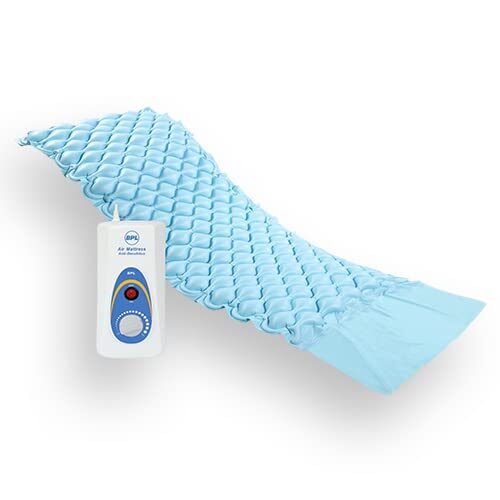
BPL Air Mattress Therapy For Bed Sores
Original price was: ₹5,578.13.₹1,607.14Current price is: ₹1,607.14. excl. gst -
Sale!
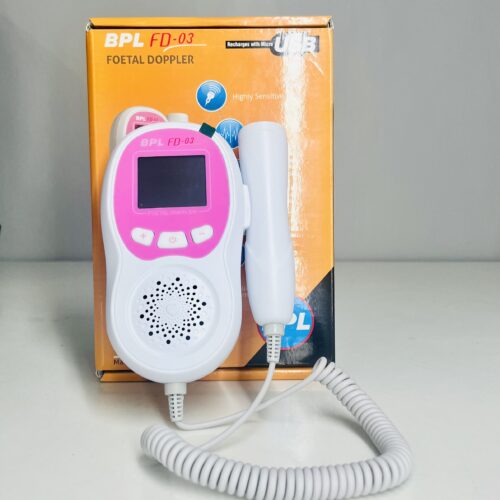
BPL FOETAL DOPPLER Recharges with Micro USB FD-03
Original price was: ₹4,593.75.₹2,766.96Current price is: ₹2,766.96. excl. gst -
Out of Stock
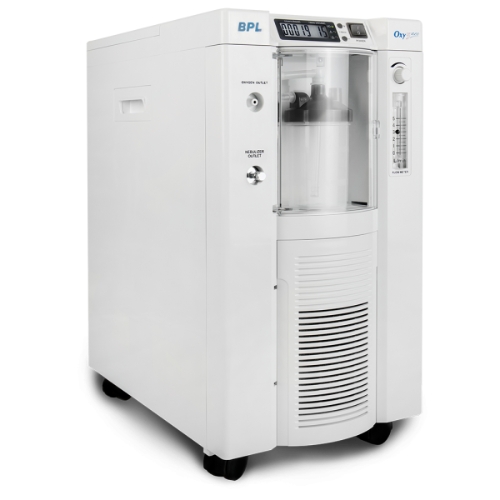
BPL OXYGEN CONCENTRATOR 5 NEO
Original price was: ₹68,250.00.₹28,000.00Current price is: ₹28,000.00. excl. gst -
Sale!
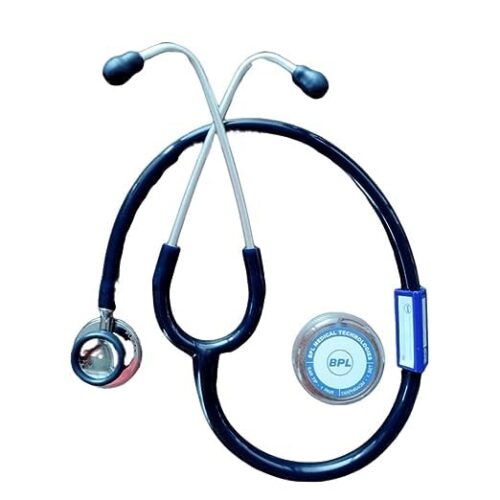
BPL STETHOSCOPE (ST-02)
Original price was: ₹1,546.87.₹846.43Current price is: ₹846.43. excl. gst

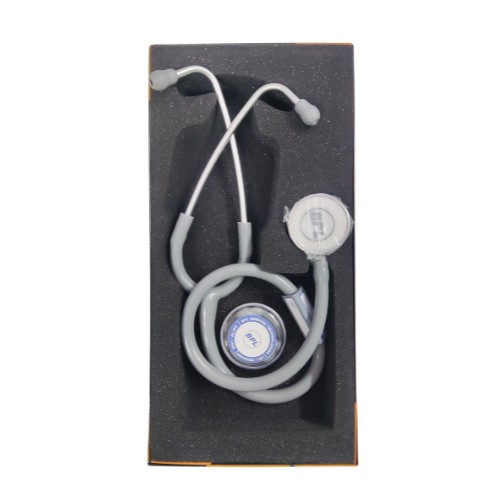 BPL Dual Side Stethoscope (ST-04) Aluminium Anodized, single sided
Reviews
There are no reviews yet.